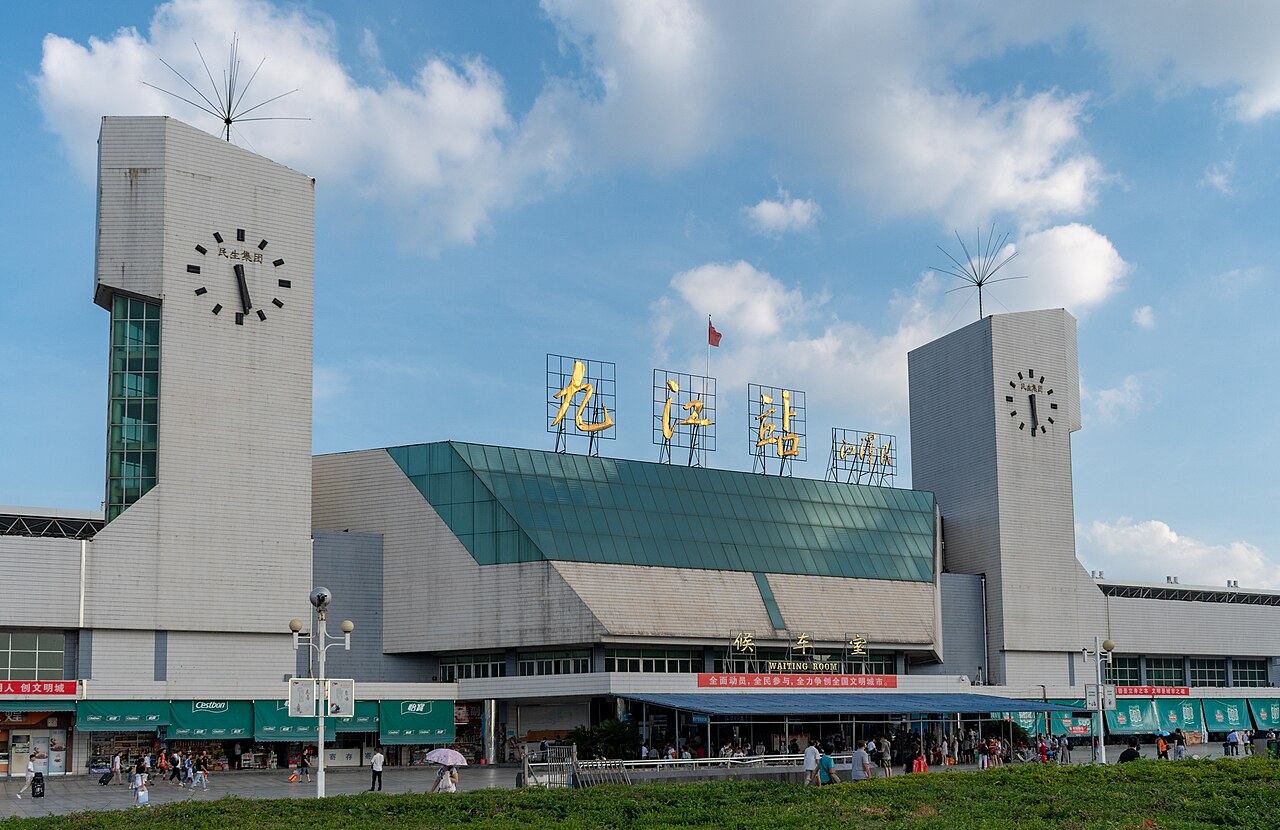
Jiujiang
Historic Yangtze port and Jiangxi's only international trade city.

Geoff Wong from Hong Kong · CC BY 2.0
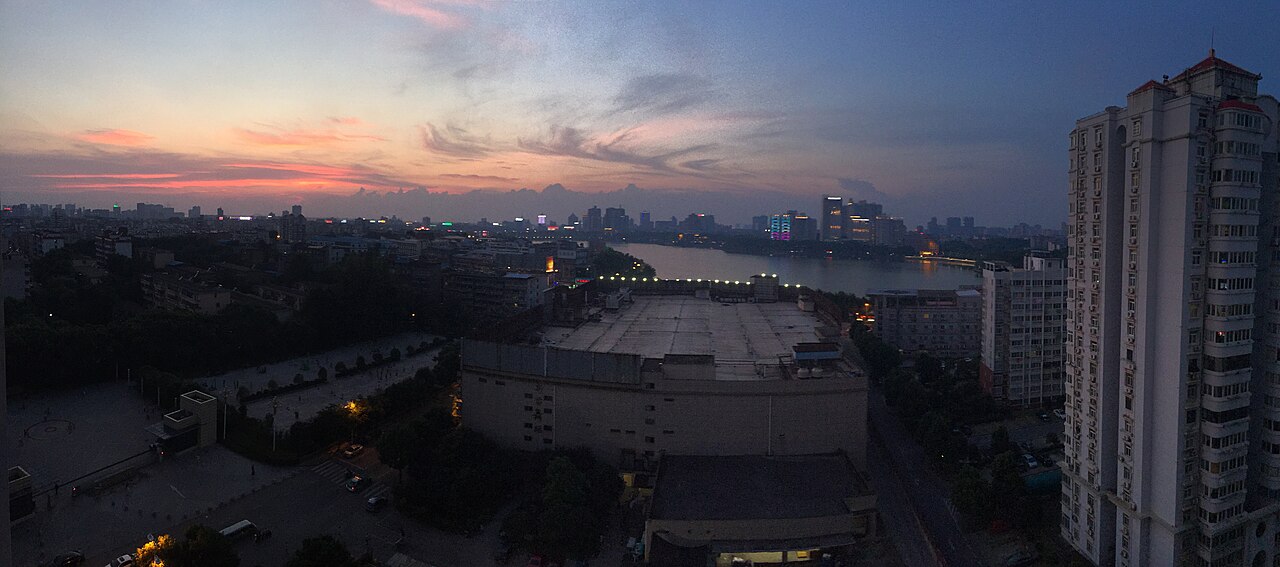
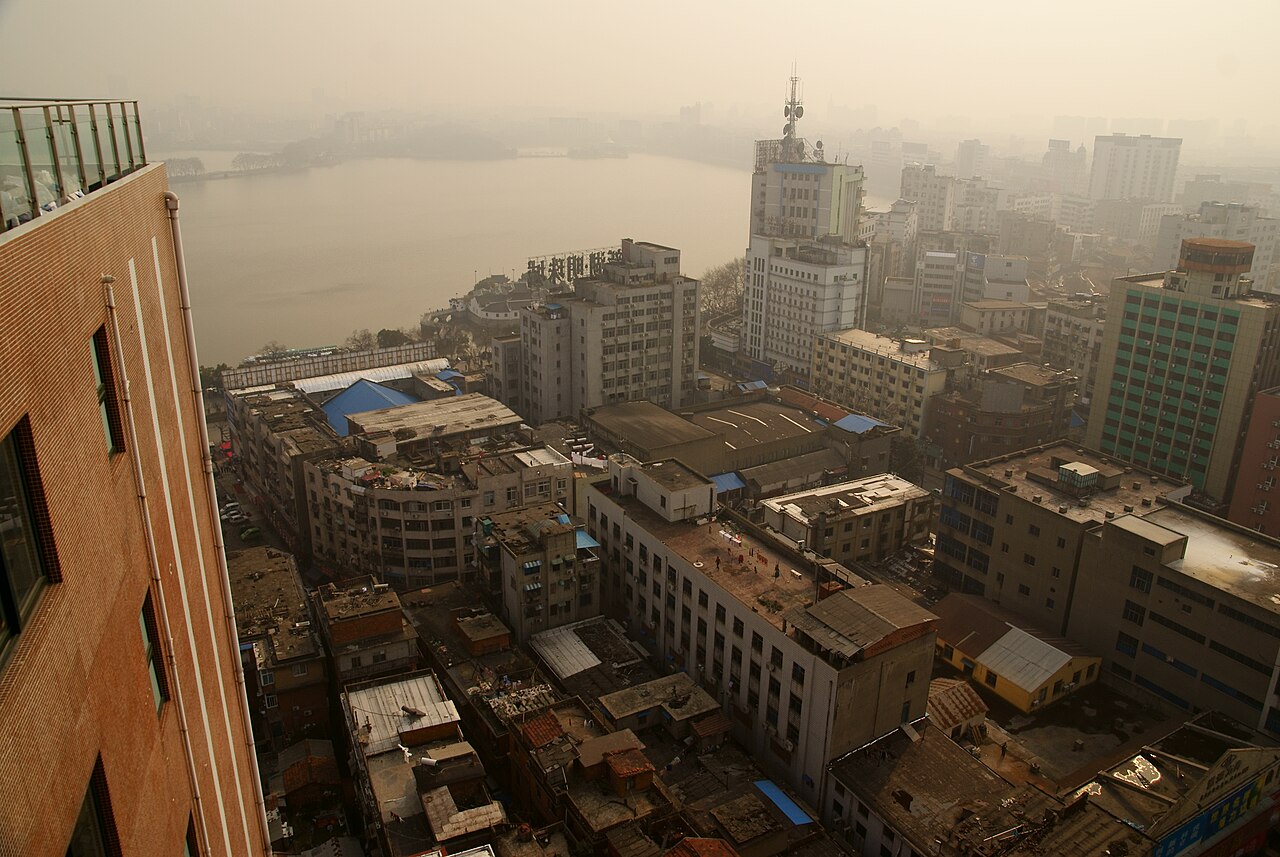
Jiujiang, formerly transliterated Kiukiang and Kew-Keang, is a prefecture-level city located on the southern shores of the Yangtze River in northwest Jiangxi Province in the People's Republic of China. It is the second-largest prefecture-level city in Jiangxi and its borders include Poyang Lake, the largest freshwater lake in China. Jiujiang is the fourth largest port on the Yangtze River and was one of the first five cities opened to foreign trade along the Yangtze River following Deng Xiaoping's Opening-Up Policy, serving as Jiangxi's only international trade port city.
- area_type
- prefecture-level city
- province
- Jiangxi
- major_water_body
- Yangtze River and Poyang Lake
Lore & Background
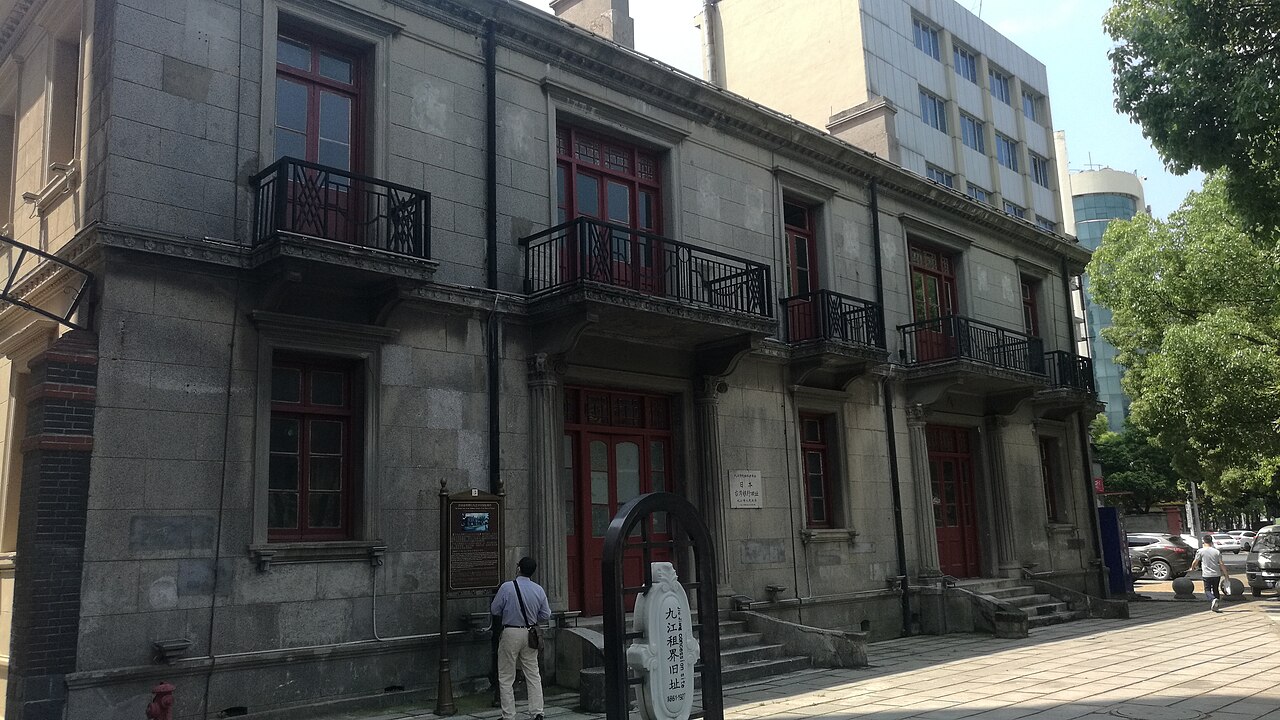
In ancient times, nine rivers were said to converge near Jiujiang, which became Jiangxi's main water port. During the Spring and Autumn period, it bordered the states of Wu and Chu. The Confucian philosopher Zhu Xi practiced at the White Deer Grotto Academy on Mount Lu's eastern flanks. Hart built the first Methodist church and Western hospital. Mary Stone and Ida Kahn, China's first two native female Western-educated doctors, returned to Jiujiang and built the Elizabeth Skelton Danforth Hospital, later renamed Jiujiang Women's and Children's Hospital. Their nursing education later spurred the founding of Jiujiang University and Jiujiang Medical School.
Reader's Guide
Jiujiang's significance lies in its long history as a major Yangtze River port and its role in China's foreign trade and cultural exchange. As one of the first five cities opened to foreign trade under Deng Xiaoping's Opening-Up Policy, it became Jiangxi's only international trade port. Its history as a treaty port brought European settlement, including a British concession, missionary hospitals, and the introduction of Western medicine through Drs. Mary Stone and Ida Kahn. Jiujiang was also a Taiping Rebellion stronghold and later a site of Japanese occupation during the Second Sino-Japanese War. Today, its economy is driven by manufacturing, including auto, machinery, petrochemical, shipbuilding, and textiles, and it hosts three economic and technological development zones. The city's unique dialect, a variety of Lower Yangtze Mandarin, distinguishes it from typical Gan dialects of Jiangxi.
Did You Know?
- Jiujiang was one of the first five cities opened to foreign trade along the Yangtze River under Deng Xiaoping's Opening-Up Policy.
A Node in the Delta's Urban Fabric
Jiujiang occupies a place among the central areas of the Yangtze River Delta, a vast geographic, cultural, and economic region that stretches across Shanghai, southern Jiangsu, northern Zhejiang, and parts of southern Anhui. The delta sits at the heart of the historical Jiangnan region, where the Yangtze River ultimately drains into the East China Sea. Within this network, Jiujiang is listed alongside major metropolitan anchors like Shanghai, Nanjing, Suzhou, Hangzhou, and Ningbo as part of the region's core urban constellation. The delta as a whole is one of the most heavily urbanised areas in China, home to more than 123 million people, and is sometimes described as a megalopolis because of the sheer number, proximity, size, and interconnectedness of its urban centres. Jiujiang's inclusion in this central list signals its role within one of the world's most densely populated and economically integrated landscapes.
The Economic Engine Surrounding Jiujiang
The Yangtze River Delta in which Jiujiang sits is one of the most economically powerful regions on the planet. In 2024, the region's GDP reached approximately US$3.2 trillion, a figure roughly equivalent to France's entire national output and representing about 17 percent of China's total GDP. The delta is home to Shanghai, China's most important financial centre, and serves as a global hub for manufacturing goods ranging from textiles to vehicles. Since the reform and opening-up program launched in 1978, the region has reasserted itself as the heart of China's economic development, surpassing other metropolitan concentrations such as the Pearl Delta in economic growth, productivity, and per capita income. The metropolitan region anchored by Shanghai and flanked by Hangzhou, Suzhou, Ningbo, and Nanjing is home to nearly 105 million people, an estimated 80 million of whom are urban residents. Jiujiang's position within this central urban list places it inside one of the most productive economic zones in the world.
Layers of History Beneath the Delta
The land that forms the Yangtze River Delta, where Jiujiang is situated among its central areas, carries millennia of human settlement and political significance. The Neolithic Liangzhu culture was based in this region, and during the Eastern Zhou period the powerful states of Wu, centred on Suzhou, and Yue, centred on the Shaoxing area, ruled here. Nanjing first served as a capital during the Three Kingdoms period, and the Eastern Jin dynasty later moved its capital to Jiankang, present-day Nanjing, in the fourth century. Hangzhou, then called Lin'an, became the capital during the Southern Song dynasty and grew into the largest city in East Asia with over 1.5 million inhabitants. The Ming dynasty initially made Nanjing its capital, and even after the Yongle Emperor relocated the seat of power to Beijing in 1421, the delta remained the empire's most important economic region. During the Qianlong era of the Qing dynasty, Shanghai began its rapid rise as the largest port in the Far East.
Language, Density, and Environmental Pressures
The demographic and linguistic landscape of the Yangtze River Delta, the region in which Jiujiang is counted among its central areas, is distinctive. Most residents speak Wu Chinese as their mother tongue in addition to Mandarin; Wu is mutually unintelligible with other varieties of Chinese, including Mandarin, and Shanghainese is actually one dialect within the broader Wu group. The delta is one of the most densely populated regions on Earth, with Shanghai alone reaching a density of 2,700 inhabitants per square kilometre. This extraordinary concentration of people, combined with upstream factories, farms, and cities, has led the World Wide Fund for Nature to identify the Yangtze Delta as the single biggest cause of marine pollution in the Pacific Ocean. Additionally, since 2003, the Three Gorges Dam has caused severe erosion and significant sediment coarsening along the Yangtze River delta front, while the river's sediment has formed an elongated subaqueous mud wedge up to 60 metres thick extending roughly 800 kilometres across the East China Sea continental shelf.
Gallery
Frequently Asked Questions
What is Jiujiang?
Jiujiang is a prefecture-level city in northwest Jiangxi Province, China, situated along the southern bank of the Yangtze River. It ranks as the second-largest city of that administrative tier within the province.
Where exactly is Jiujiang located?
The city sits on the south shore of the Yangtze in the northwestern part of Jiangxi, and its municipal borders extend to encompass Poyang Lake, China's largest freshwater lake.
What is Jiujiang's role in trade?
It operates as the fourth-largest river port on the Yangtze and holds the distinction of being Jiangxi's sole city with an international trade port designation. Following the Opening-Up Policy, it was among the first five Yangtze cities granted foreign trade access.
What is Poyang Lake and how does it relate to Jiujiang?
Poyang Lake is the largest freshwater lake in all of China, and it falls squarely within Jiujiang's municipal boundaries, making the lake a defining geographic feature of the city.
What was Jiujiang's old name?
In older English-language sources the city appeared under the transliterations Kiukiang or Kew-Keang before the standard pinyin spelling of Jiujiang became universal.
More in Cities Starting With J 1-18
Spotted an error? Know more?
This is a living reference — every entry is fact-audited, and reader corrections feed straight into our audit queue. Suggest an edit · See this site's audit record