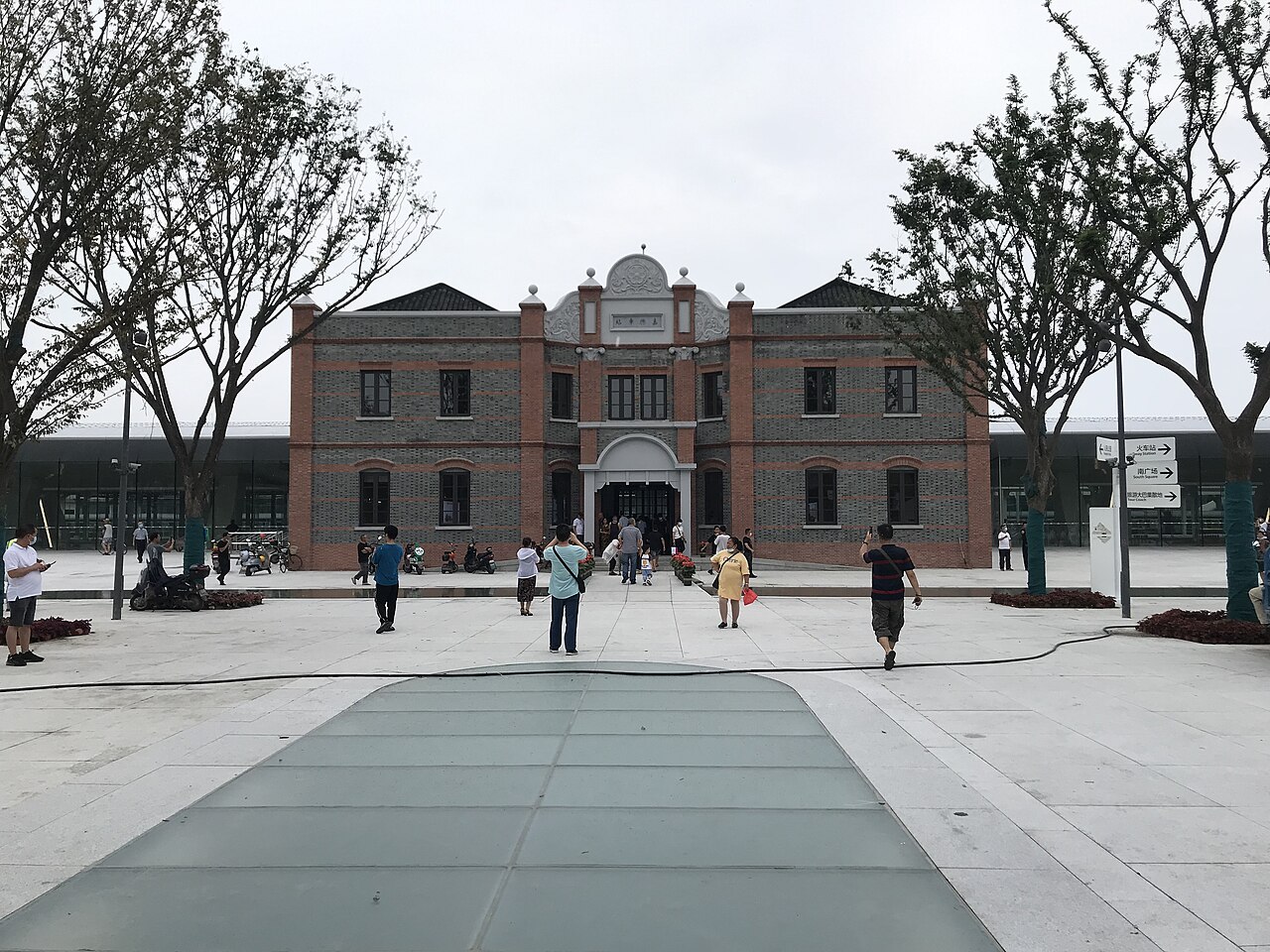
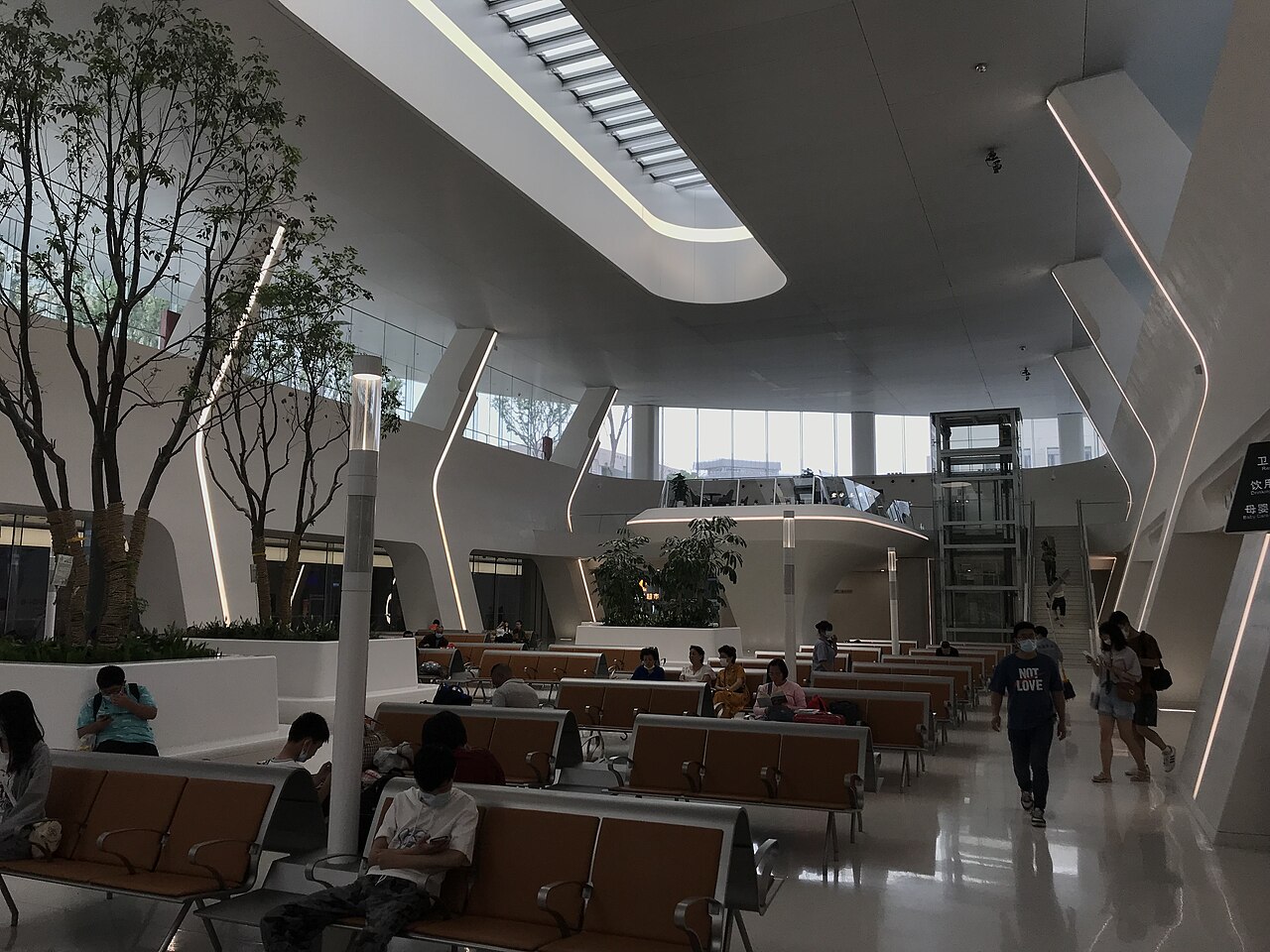
Jiaxing
Prefecture-level city in northern Zhejiang, China.

DF7C5100 · CC BY-SA 4.0
Jiaxing is a prefecture-level city in northern Zhejiang province, China, lying on the Grand Canal of China.
- Nuclear power plants
- Qinshan Nuclear Power Plant, Fangjiashan Nuclear Power Plant (began commercial operation in 2014)
Lore & Background
Jiaxing's history stretches back to the Neolithic Age, where the Majiabang Culture engaged in farming, animal husbandry, fishing, and hunting 7,000 years ago. During the Spring and Autumn period, it was known as Zuili (Drunken Plums) and was an important city in the state of Yuè.
Reader's Guide
Jiaxing holds significant historical and cultural importance in China. As the birthplace of the Majiabang Culture, it provides evidence of early human activity in the region dating back 7,000 years. Economically, Jiaxing is a major industrial hub, with textiles, woolens, and leather goods being prominent exports. It is also an important energy base, hosting the Qinshan Nuclear Power Plant, China's first self-designed nuclear power station. The city's cultural heritage is preserved in restored neighborhoods like Meiwan Street and Yuehe Street, as well as in the canal towns of Wuzhen and Xitang, which are popular tourist destinations. Jiaxing's dialect is a Northern Wu dialect, closely related to Shanghainese and Suzhou dialect, reflecting its linguistic ties to the region.
Did You Know?
- Jiaxing is the birthplace of the Majiabang Culture, which existed 7,000 years ago.
- Jiaxing is home to the Qinshan Nuclear Power Plant, the first self-designed nuclear power station in China.
Economic Engine of a Nation
The Yangtze River Delta stands as the beating heart of China's modern economy. In 2024, the region generated roughly US$3.2 trillion in GDP, a figure that rivals the entire French economy and accounts for about seventeen percent of the nation's total output. This extraordinary concentration of wealth is anchored by Shanghai, which serves as the country's preeminent financial center, while the broader delta functions as a global manufacturing powerhouse producing everything from textiles to automobiles. The region's urbanization is among the most intense in the world, with over 123 million residents spread across a network of interconnected cities so dense and numerous that observers sometimes classify the area as a true megalopolis. Since the reform and opening-up policies launched in 1978, the delta has consistently outpaced other Chinese metropolitan clusters—including the Pearl River Delta—in terms of growth rate, productivity, and per capita income, cementing its role as the engine driving the nation's economic ascent.
A Thousand Years of Capitals and Commerce
Long before modern skyscrapers rose along the river's mouth, the delta was already a crucible of civilization. The Neolithic Liangzhu culture took root here, and by the Eastern Zhou period the region hosted two formidable states—Wu, centered on Suzhou, and Yue, based in the Shaoxing area. Nanjing first claimed capital status during the Three Kingdoms era as the seat of Eastern Wu, and later became the Eastern Jin's seat after that dynasty lost the north. The Tang dynasty saw the delta emerge as the empire's foremost agricultural and industrial center, while the Southern Song made Hangzhou, then called Lin'an, the largest city in East Asia with a population exceeding 1.5 million. By the mid-to-late Ming, the region nurtured what scholars describe as the first stirrings of capitalism in East Asia. The Qianlong era propelled Shanghai to the rank of the Far East's largest port, and by the late nineteenth century the delta had become China's first industrialized zone.
Dense Crowds and a Distinct Tongue
Few places on Earth pack as many people into as little space as the Yangtze Delta. The region is among the most densely populated on the planet, and its flagship city, Shanghai, reaches a density of roughly 2,700 inhabitants per square kilometre. The metropolitan region as a whole shelters nearly 105 million people, of whom an estimated 80 million live in urban settings. This extraordinary concentration of human life has deep linguistic roots. The majority of residents carry Wu Chinese as their mother tongue—a language group that is mutually unintelligible with Mandarin and with other major varieties of Chinese. It is worth noting that what outsiders often call 'Shanghainese' is actually just one dialect within the broader Wu family, not a standalone language. The coexistence of this distinct linguistic heritage alongside the national standard Mandarin gives the delta a layered cultural identity that sets it apart from other parts of China.
Sediment, Erosion, and a Polluted Sea
The delta's relationship with the natural environment is complex and increasingly strained. The World Wide Fund for Nature identifies the Yangtze Delta as the single largest source of marine pollution in the entire Pacific Ocean, a consequence of its massive population, industrial factories, agricultural runoff, and the many cities situated upriver. Geologically, the river's sediment does not simply scatter across the East China Sea shelf; instead, it forms an elongated subaqueous mud wedge stretching roughly 800 kilometres and reaching up to 60 metres in thickness. Since the Three Gorges Dam began operations in 2003, the delta front has suffered severe coastal erosion and a marked coarsening of its sediment, fundamentally altering the shoreline dynamics that communities have depended upon for centuries. These combined pressures—industrial, demographic, and hydrological—make the delta's environmental future one of the most consequential questions in Chinese geography.
Gallery


Frequently Asked Questions
Who is Jiaxing?
Jiaxing is a prefecture-level city in the northern part of Zhejiang province, China, situated along the Grand Canal.
What are Jiaxing's signature abilities?
The city hosts two nuclear power stations, Qinshan and Fangjiashan, the latter having begun commercial operation in 2014, which cements its role as a major energy producer.
Where does Jiaxing sit on the Zhejiang 'map'?
It occupies the northern corridor of Zhejiang province and is threaded by the Grand Canal of China, tying it into the country's historic waterway network.
Why is Jiaxing worth reading about?
Its blend of Grand Canal heritage and large-scale nuclear generation gives it a distinctive dual character that sets it apart from neighboring cities.
What role does Jiaxing play in the broader 'story'?
As a prefecture-level administrative center in northern Zhejiang, it functions as a key junction linking the province's canal system with its modern energy infrastructure.
More in Cities Starting With J 1-18
Spotted an error? Know more?
This is a living reference — every entry is fact-audited, and reader corrections feed straight into our audit queue. Suggest an edit · See this site's audit record