Jinan
Capital of Shandong, known as the City of Springs.

Ermell · CC BY-SA 4.0
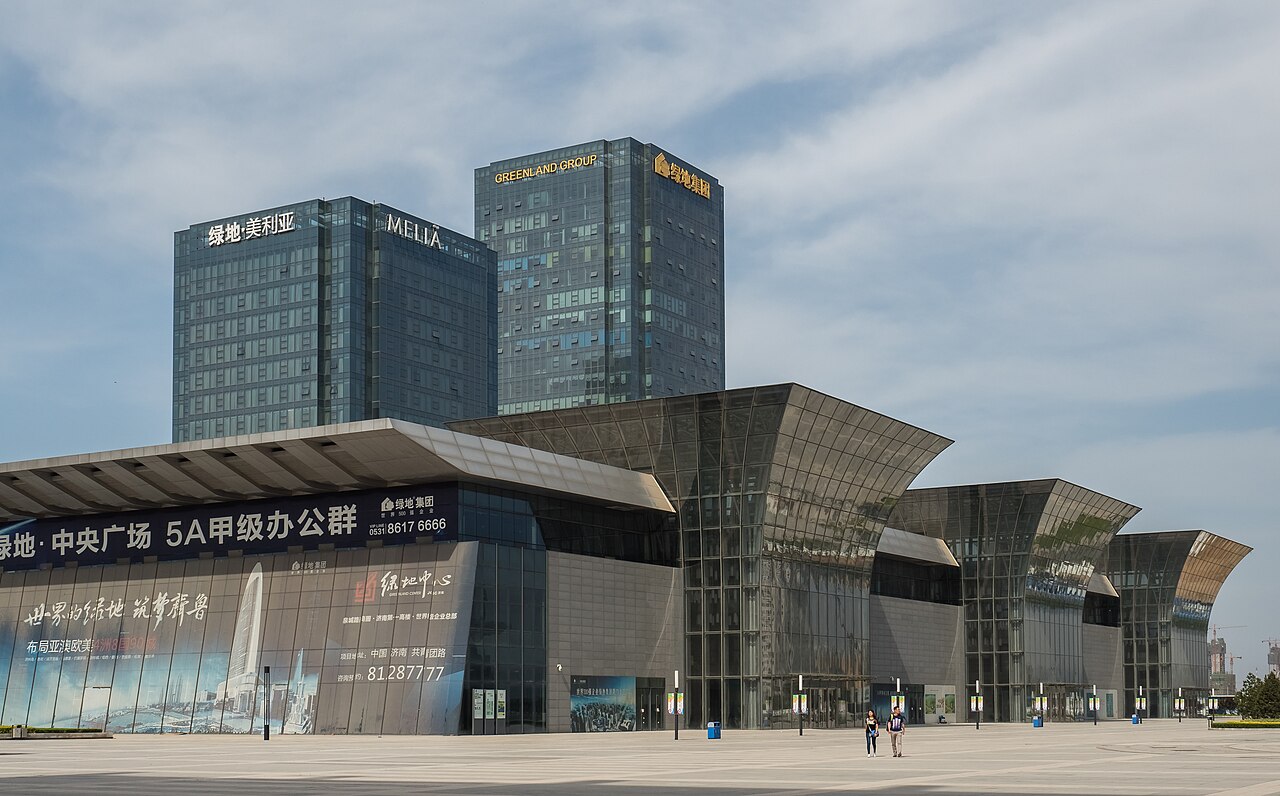
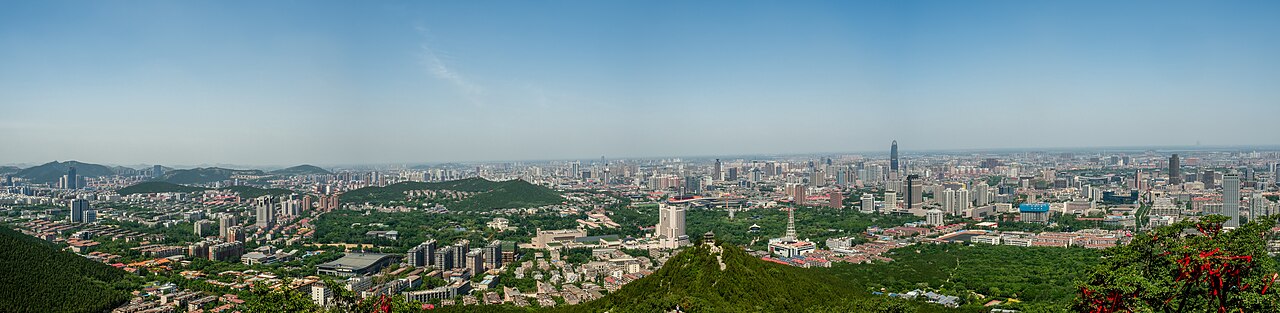
Jinan is the capital of Shandong province in Eastern China. With a population of 9.2 million, it is one of the largest cities in Shandong and has served as a major national administrative, economic, and transportation hub.
- Population
- 9.2 million
- Province
- Shandong
- Nickname
- City of Springs
- GAWC Rating (2020)
- Beta- (Global second-tier city)
- Nature Index 2025 Rank
- #27 in the world for scientific research
Lore & Background
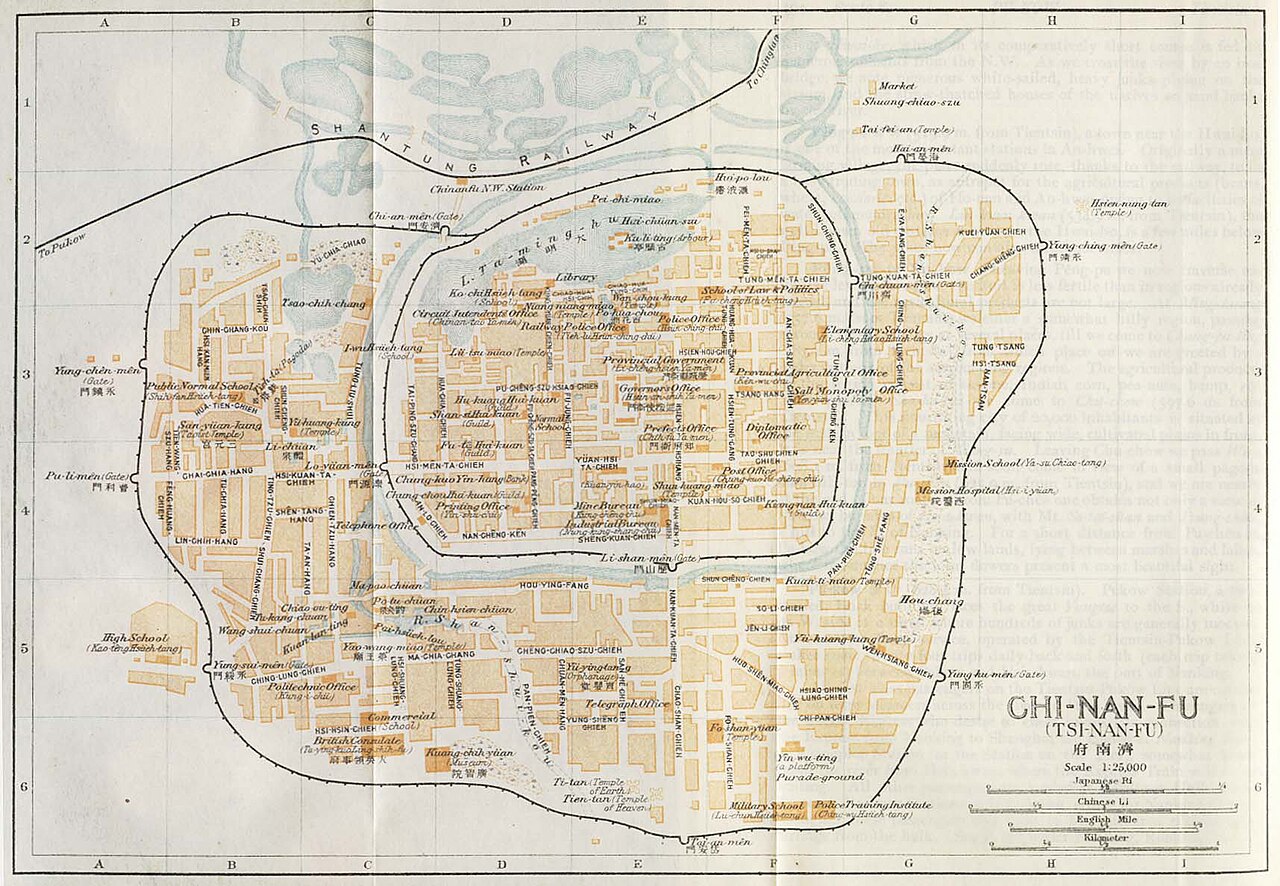
Bian Que, considered the earliest Chinese physician, is said to have been a native of present-day Changqing County, while Zou Yan of Zhangqiu developed the concepts of Yin-Yang and the Five Elements. During the Han dynasty, Jinan was the capital of the feudatory Kingdom of Jibei. Cao Cao served as an official in Jinan before becoming de facto ruler of the Han dynasty. Buddhism flourished from the 5th century CE, with temples such as Langgong Temple (later Shentong Temple) and extensive cave temples built in the hills south of Jinan. After a decisive battle, Li Tan retreated to Jinan, tried to drown himself in Daming Lake, but was rescued and executed by trampling. During the Ming dynasty, Jinan replaced Qingzhou as the capital of Shandong province.
Reader's Guide
Jinan's significance stems from its long history as a cultural, economic, and administrative center in Eastern China. Jinan is home to several major universities, including Shandong University, a member of the Double First-Class Construction, and is ranked #27 globally for scientific research by the Nature Index 2025. Historically, Jinan was a hub for Buddhism, poetry, and art, with figures like Li Qingzhao, Xin Qiji, and Zhao Mengfu associated with the city. The German-built Jiaoji railway and the Boxer Rebellion's local discontent over its construction highlight Jinan's role in modern Chinese history. Today, Jinan remains a key transportation hub and a center for education and research.
Did You Know?
- Jinan is called the 'City of Springs' because of its 72 famous artesian springs.
- The poet Li Qingzhao, the most renowned female poet in Chinese history, was born in Jinan.
Founding & Early Fleet Development
Shandong Airlines was formally established on 12 March 1994, with its first commercial flights taking off just months later in September of that same year. The carrier launched with a remarkably modest fleet of a single Xi'an Y-7-100 turboprop, a far cry from the operation it would eventually become. Within a year, the airline placed orders for three Boeing 737-300 aircraft, with deliveries staggered across late 1995 and into 1996, a move designed to support roughly 60 weekly flights across ten destinations. The late 1990s and early 2000s saw further fleet experimentation: a 1997 letter of intent for three Saab 2000s, a 1999 agreement with Bombardier for five CRJ200s that made Shandong the first Chinese carrier to fly the type in scheduled revenue service, and a 2002 order for two CRJ700s, again a national first. The airline also briefly dabbled in Cessna 208 Caravan aircraft for regional routes before eventually placing them for sale in 2007.
Strategic Alliances & Industry Consolidation
The late 1990s and early 2000s were a period of intense consolidation in Chinese aviation, and Shandong Airlines navigated it through a series of strategic partnerships. In September 1997, it joined five fellow provincial carriers—Hainan, Shenzhen, Sichuan, Wuhan, and Zhongyuan—to establish the New Star (Xinxing) Aviation Alliance, a defensive coalition intended to strengthen finances and ward off absorption by larger rivals. That collaborative instinct carried into 2001, when Shandong became part of the China Sky Aviation Enterprises grouping alongside China Postal, Shanghai, Shenzhen, Sichuan, and Wuhan Airlines, a partnership focused on codesharing and reducing direct competition. The airline also explored aggressive expansion through acquisition, announcing plans in late 2000 to absorb Shanxi Airlines, though that deal ultimately fell through. In 2002, Shandong further deepened its industry ties by purchasing an 8% stake in Sichuan Airlines alongside China Southern and Shanghai Airlines.
International Expansion & the Boeing Fleet
For years Shandong Airlines operated almost exclusively within China's borders, but that changed in June 2004 when the carrier launched its maiden international service, linking Jinan to Singapore with a stop in Shenzhen. That single route marked the beginning of a broader international network reaching regional Asian destinations. A defining characteristic of the airline's growth strategy was its unwavering commitment to Boeing aircraft. Starting with the 737-300s of the mid-1990s, the fleet evolved through 737NG and 737 MAX variants, and by April 2014 the airline committed to a sweeping order of 50 Boeing 737s—16 NG models and 34 MAX aircraft. This all-Boeing philosophy has earned Shandong a unique global distinction: it ranks as the world's fifth-largest operator of exclusively Boeing aircraft. Domestically, it holds the eighth-largest position among Chinese carriers, with its primary hubs in Jinan, Qingdao, and Yantai feeding a network of major cities across the country.
Corporate Structure & Industry Position
Shandong Airlines is headquartered in the Shandong Airlines Center in Jinan, the provincial capital, and operates under the nickname SDA or simply Shānháng. Its ownership structure reflects the broader pattern of state-backed consolidation in Chinese aviation. The controlling shareholder is Shandong Aviation Group, which holds a 37% stake, while Air China—the nation's flagship carrier—sits as a strategic partner with a 51% share. Air China's involvement was formalised in March 2004, when it acquired a 22.8% stake in the airline and over 40% of Shandong Aviation Group, a deal that had been in the works since 2003. Beyond its core passenger operations, the airline's history includes a brief foray into freight services with two 737 freighters announced in 2001, a charter subsidiary called Rainbow Jet that operated Bombardier Challenger 604 business jets before ceasing operations in 2006, and a 2005 partnership with the Spartan School of Aeronautics to open a flight academy in Qingdao.
Gallery

Frequently Asked Questions
What is Jinan?
Jinan is the provincial capital of Shandong in eastern China, functioning as a major administrative, economic, and transportation hub. It is home to approximately 9.2 million residents.
Why is Jinan nicknamed the City of Springs?
The city earns this title from its abundance of natural hot springs that have shaped local culture, daily life, and tourism for centuries.
How large is Jinan compared to other Chinese cities?
At roughly 9.2 million people, it is one of the largest urban centers in Shandong province and a significant node in China's eastern economic corridor.
What is Jinan's global city rating?
The 2020 GAWC assessment placed Jinan at Beta-, classifying it as a global second-tier city. It also ranked 27th in the world on the Nature Index 2025 for scientific research output.
Why is Jinan important to Shandong?
As the seat of provincial government and a key transportation crossroads, Jinan anchors the region's political, commercial, and logistical infrastructure.
More in Cities Starting With J 1-18
Spotted an error? Know more?
This is a living reference — every entry is fact-audited, and reader corrections feed straight into our audit queue. Suggest an edit · See this site's audit record